
At Ease Cookz Food Truck & Trivia
November 03@ 5:30 pm—9:00 pm

Most of us pass the small memorials along Oro Valley’s roads without a second look—a cross here, a few faded flowers there. Chet Kostrzewa stopped, then kept stopping for years, across four states. The result is a 100-plus photograph book called In the Footsteps of Angels, and it says a lot about how he sees the world.
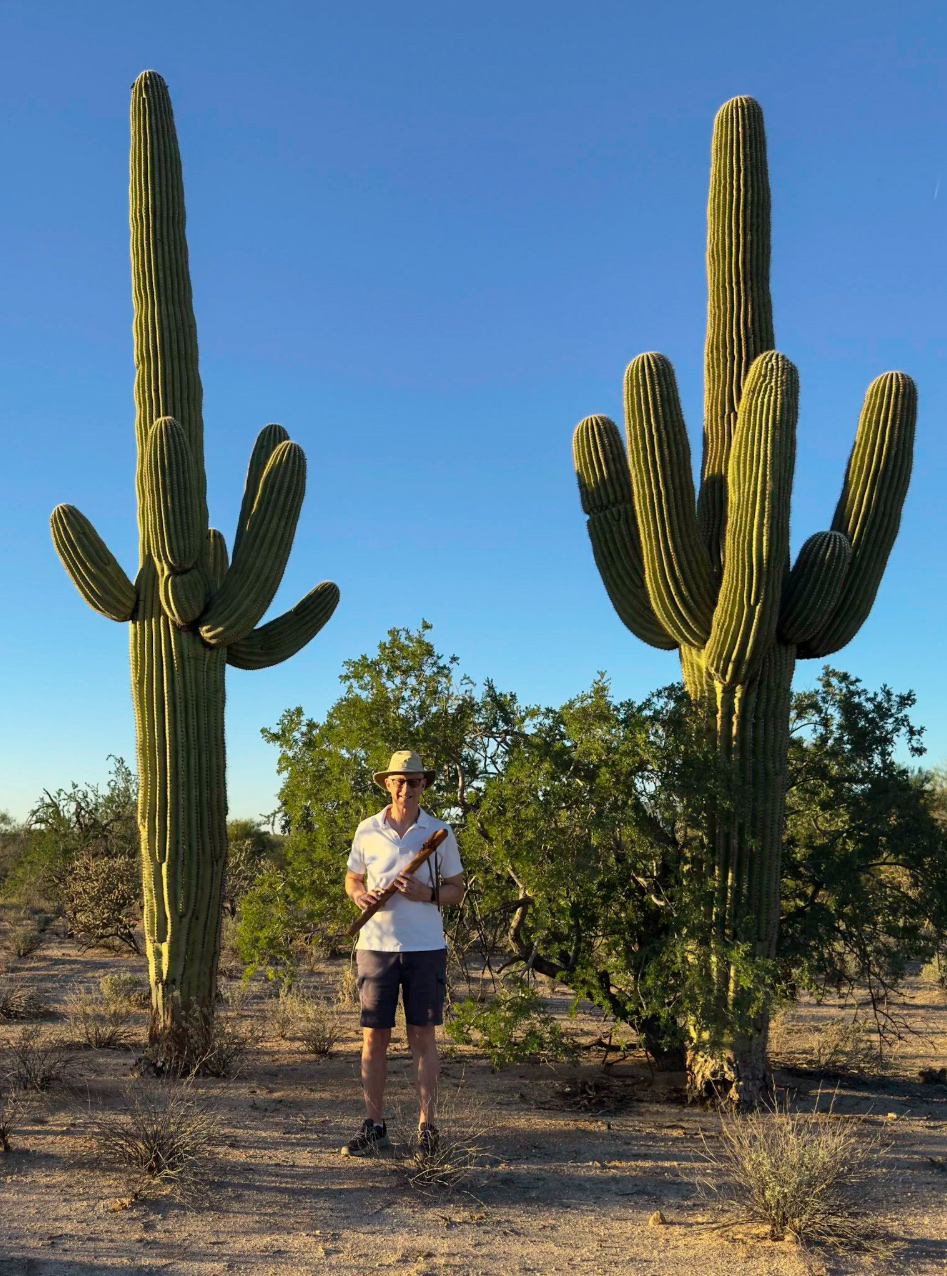
Chet Kostrzewa
He wasn’t interested in couch surfing, and the usual volunteer routes didn’t draw him either. After years behind a desk, they felt too familiar. He did love photography, which started in high school, in an after-hours class where he learned to develop film and print in black and white. Through his working years, it stayed a hobby. Retirement gave him the time to take it seriously.
Chet’s first big project wasn’t a photo project. He spent roughly two years researching and writing a biography of Charlie Meyer, one of Tucson’s early German settlers and a direct ancestor of Chet’s wife. Meyer still appears in newspaper articles, often wrapped in misunderstanding and hyperbole, so Chet dug into what the record actually shows. He printed a small book for friends and family.
Photography came next. He built a website where he groups photographs around an idea he’s been thinking about and writes a blog to go with them. He’s done one about every six months for seven years. Visitors have come from several states and about 15 countries. He hoped for conversation. In seven years, he’s had one response, from a cousin.
That silence pushed him toward books, where a subject can breathe. His first, First Impressions, grew out of a week in Santa Monica. He asked what first impression we leave on foreign visitors, and photographed what he found, from people sleeping in a park to expensive sports cars parked on the street. It’s available on Amazon. The second followed the saguaro’s life cycle and included an environmental warning.
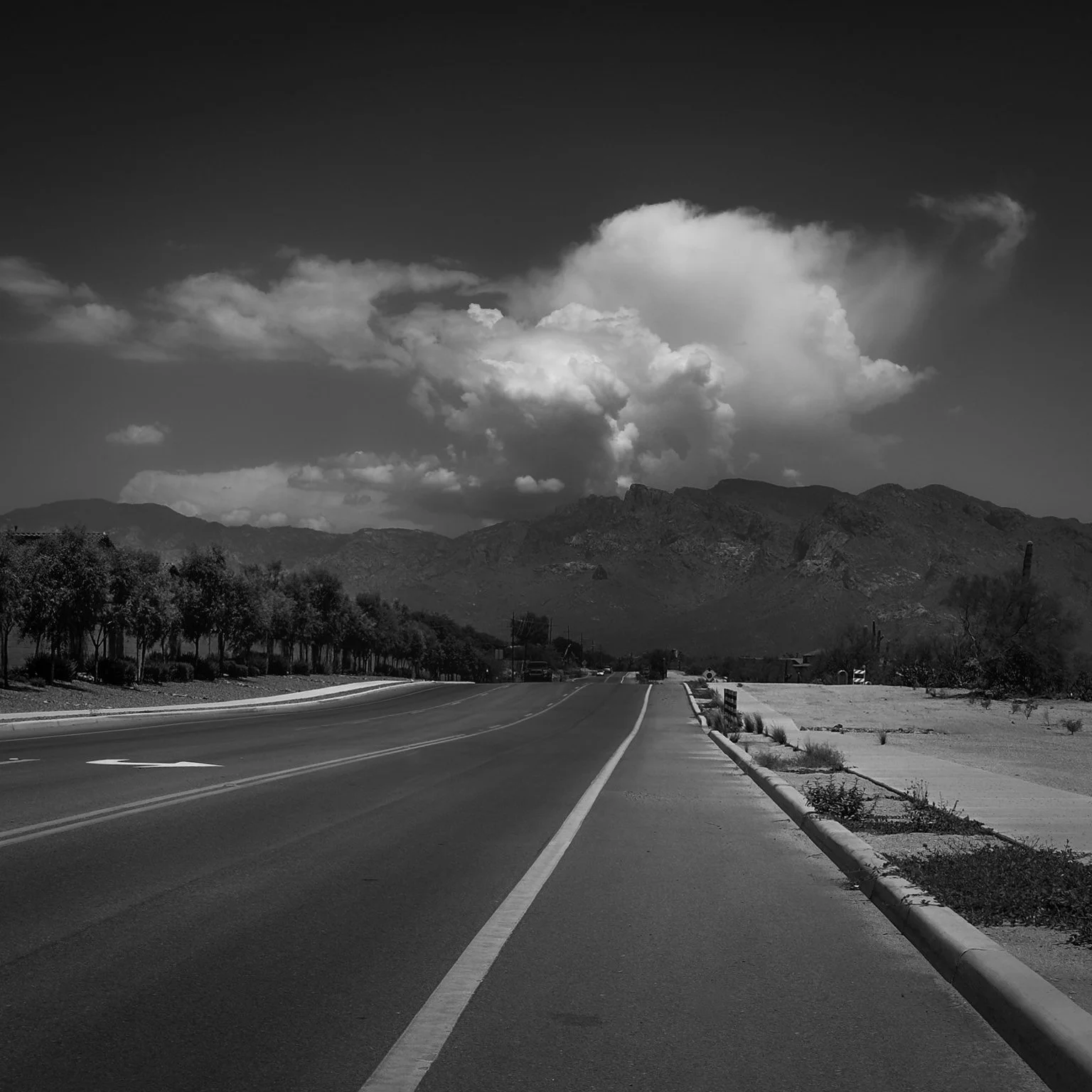
Road into the Storm
He first hoped the book could raise money for local road safety nonprofits. He had taught bicycle safety in Los Angeles, so the cause was personal. He pitched four organizations. Three never replied, and the fourth liked the idea but had lost its federal funding and couldn’t take it on. The fundraiser died, but the book didn’t.
What he found along the way surprised him. These aren’t one-and-done gestures. He photographed the same shrine on the south side of Tucson months apart, once dressed in white flowers and later in yellow. Families keep coming back. Some memorials aren’t tied to a crash at all. A ghost bike on the road north of town honors a Saddlebrooke cyclist whose club placed it where he loved to ride. Chet suspects he may have died of natural causes.
The book is personal too. It’s dedicated to his sister Jenny, who died of cancer about ten years ago. His parents are buried 2,000 miles away in the Midwest, so he can’t visit on a whim. A favorite memorial along his drive does some of that work for him. “I could still make a connection to my sister, or other things in my life, through these,” he says.
He came up with the title one day after photographing a small angel hanging from a barbed wire fence near Marana. “If you drive by, you might see the cross,” he says, “but you don’t see this beautiful little angel hanging on a wire.”
Chet grew up in Wisconsin, the son of an executive at a company that built papermaking machinery. The job meant travel, and then moves. First came Washington state, then, when Chet was 10, Switzerland. He remembers the TV schedule there, about three hours a night, and the joke that Swiss TV was people standing on their balconies watching the world go by. He thinks that’s healthier than what we have now.
His own career was in aerospace, with stops at about half a dozen companies, including ITT, Litton and Sundstrand. A college psychology course convinced him that changing jobs pays off, and he liked the idea of never getting bored. It took him to England, Scotland and China. In China he managed a small joint venture of about 50 employees in an industrial town roughly 100 miles west of Shanghai. He was the only non-Chinese employee, and he says the pollution probably cost him a few years of his life.
His favorite job, though, was a shipyard in Michigan’s Upper Peninsula, building 150-foot wooden-hulled minesweepers. Wood doesn’t attract mines, and the specialty non-magnetic bolts could cost a couple hundred dollars each. “It was the most high-tech thing you could imagine,” he says.
What living abroad taught him is simple. People everywhere want the same things: to provide for their families and be healthy and happy. Corruption shows up everywhere too, just to different degrees.
He learned about the Greater Oro Valley area through his wife’s family, who were from Tucson. Years of vacations at El Conquistador (once a Sheraton, and ITT’s hotel division gave employees good rates) made the area feel familiar. A layoff in Scotland brought the family back to the U.S. during a recession, and Chet spent a stretch in Tucson working for Pima County and a bicycle shop before aerospace pulled him back to California. That stay sealed it. When retirement came, Tucson was the answer.
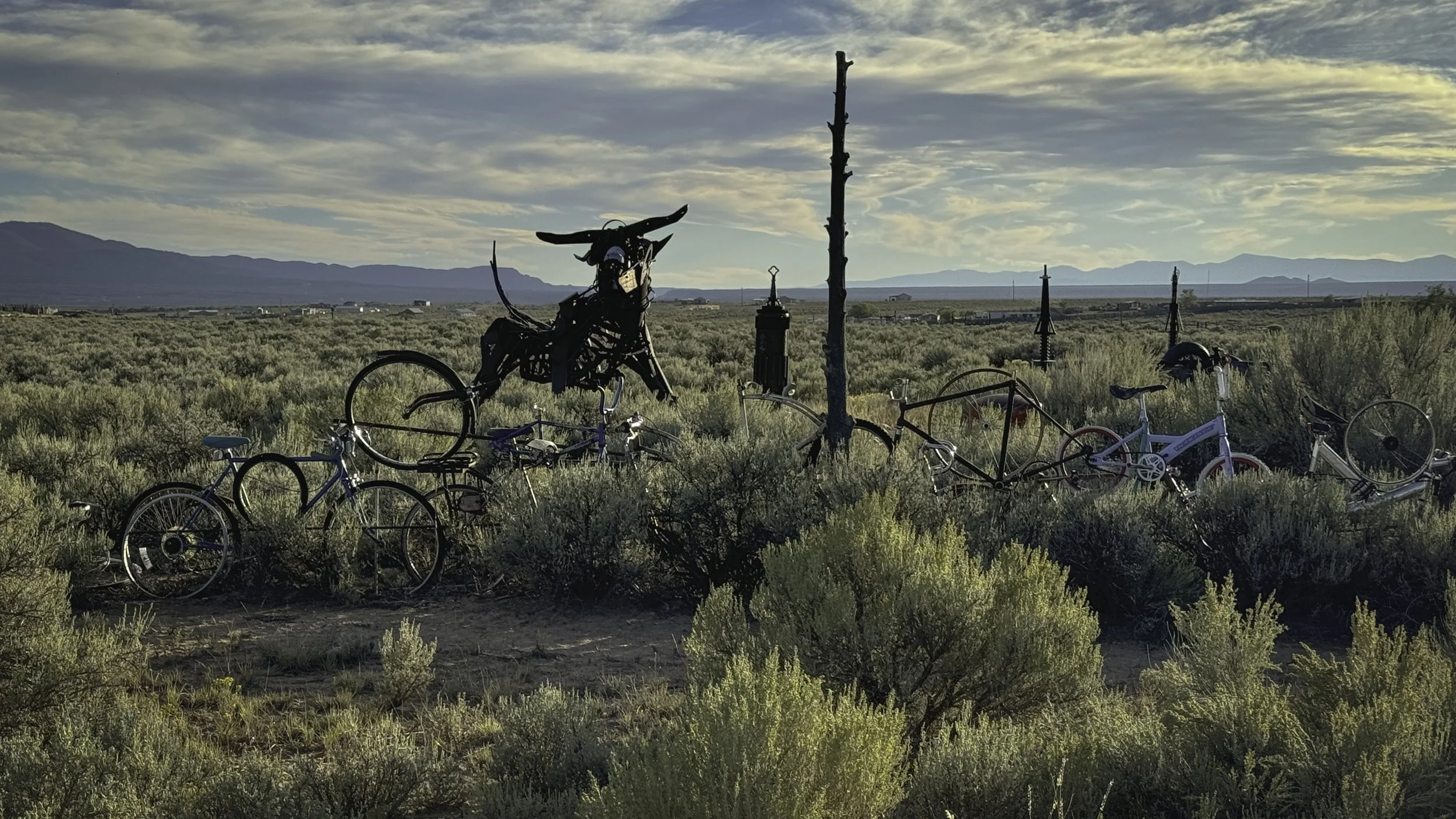
Bikes Meet Beast
He also pushes back on the idea that the Sonoran Desert is boring. A coworker in California once called it brown and ugly. Chet remembers a wet-winter drive south to Nogales when the wildflower bloom was so thick that the local driving the van said he hadn’t seen anything like it in 15 years. To Chet, the desert’s value lies in its variety and starkness, qualities he finds especially striking in black and white.
He’s candid about composition, too. One of his favorite images, taken on Orange Grove Road a quarter mile west of the hospital, includes a telephone pole that most of us would crop out. Chet kept it on purpose. He says it places the memorial in the real world, right beside something unremarkable.
Chet is thinking about a people-focused project, something he’s never been comfortable doing. He’d like to photograph portraits tied to the immigrant community, and to counter what he sees as misguided hostility toward immigrants. He says the evidence shows immigrants driving outsized job creation and wealth, paying their share in taxes, and contributing to lower crime rates than the general population. The project is still just an idea.
Asked what he wants readers to take away, Chet doesn’t mention sales. He wants his work to help people slow down and look differently. He’s critical of social media and the shrinking attention span it brings, and he sees his books as a small counterweight. They ask the viewer to stay with an image long enough to find the detail.
In the Footsteps of Angels is published through Blurb and lists at $75. Chet says first-time Blurb buyers recently got 30 percent off, though that offer may have changed. First Impressions is available on Amazon. His website, where he posts a photo-and-blog project about twice a year, is Chet Kostrzewa Photography. Book link: Blurb. Amazon link.

;>)
;>)
;>)