Freebird Shoppe Grand Opening
November 01@ 10:00 am—7:00 pm
Lady Liberty has held her torch over New York Harbor for 140 years and has never once taken a day off. This November, with Election Day, Veterans Day, and Thanksgiving all coming up, she steps down from the pedestal and takes a seat beside Pusch Ridge to talk about light, service, gratitude, and what it means to be a neighbor in a place people choose to call home.
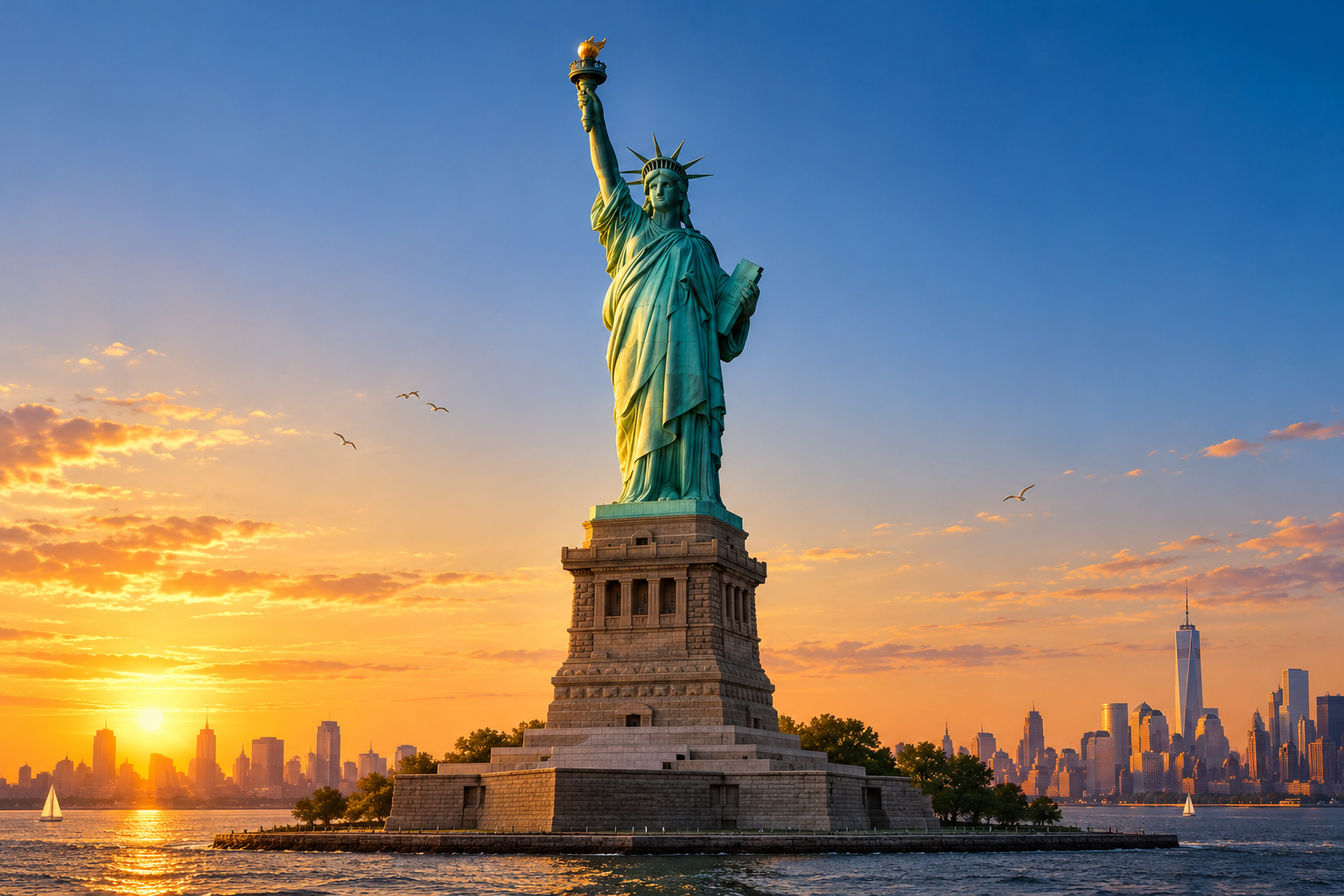
Lady Liberty
She studies a saguaro across the path, arm raised against the sky. “Forgive me,” she says, nodding toward it. “I hope it doesn’t mind sharing the pose. We’ve both been standing like this for a very long time.”
Liberty: Paperwork, money, and a war. France was supposed to pay for me, and America was supposed to build the pedestal. Then France lost a war with Prussia, and everyone had other things to worry about. My torch arm made it to Philadelphia in time for the centennial in 1876, like showing up to a birthday party with only the hand holding the gift. The rest of me took another ten years.
In the end, I came across the ocean in hundreds of crates, and the pedestal got finished after newspaper publisher Joseph Pulitzer pushed ordinary Americans to chip in. That part matters to me. I was always meant to be a gift from the people of France to the people of the United States. I got built because regular people on both sides kept pitching in. And now it’s your 250th, so I’m still the late gift. I like to think I’ve earned my keep since.
Liberty: I’m made of copper, and I’m told this is the Copper State, so I felt I ought to pay my respects to the family. My torch is covered in gold leaf too, so a town called the Valley of Gold seemed like a natural stop.
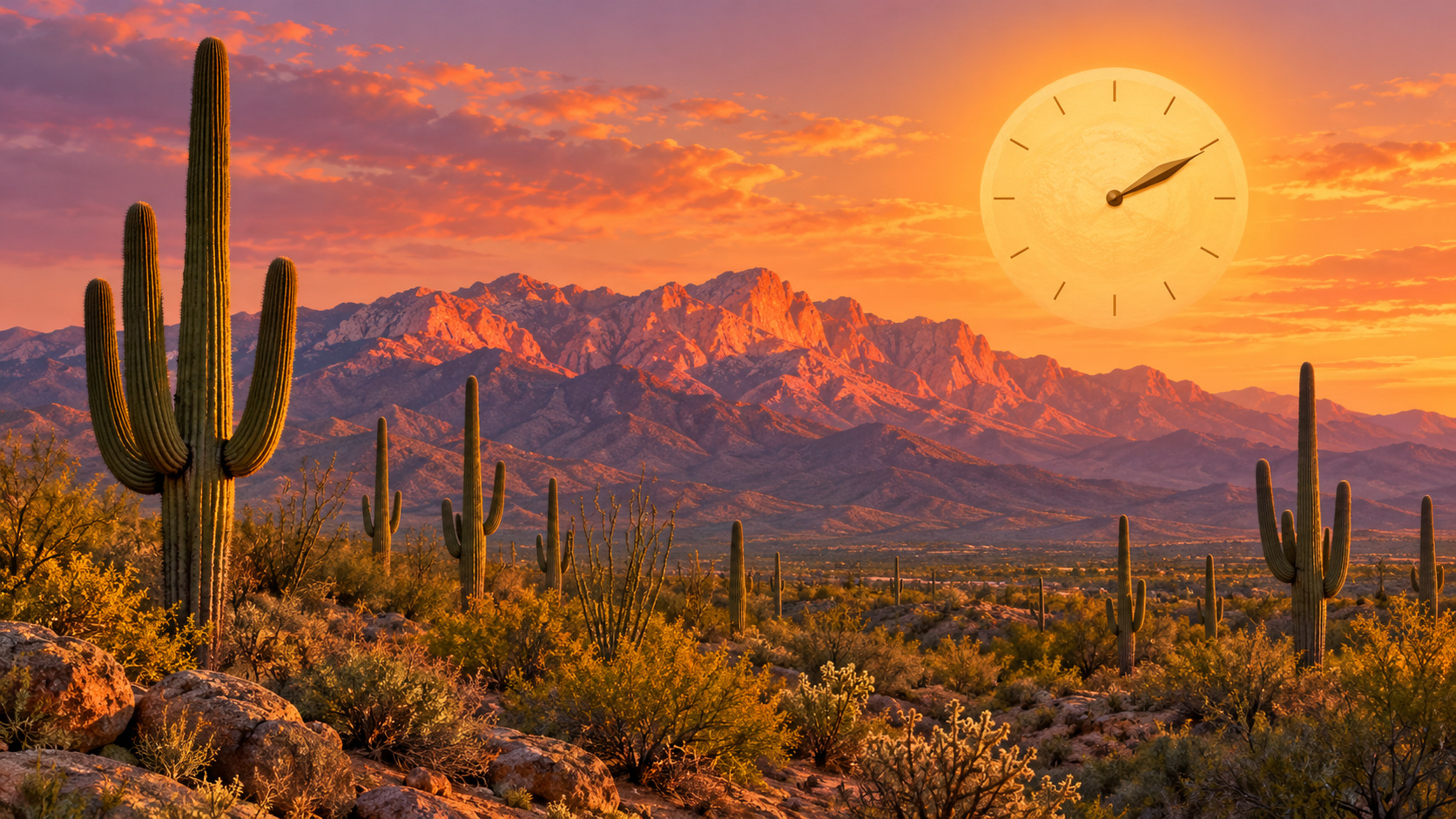
But mostly it’s the view. I spend my days facing a harbor full of ships, ferries, and tourists with cameras. Here I get a mountain at sunset and a hawk circling overhead and a saguaro who, I’ll say it, has better posture than I do.
Liberty: That you need both, and that most people remember only one.
The torch stands for enlightenment. My full name is Liberty Enlightening the World, and the idea is that a free people must be informed. Light isn’t worth much if no one looks at what it shows. So before you vote, read the ballot, including the parts nobody mentions at dinner. Local races and the general plan question are decided by people who bothered to read them.
The tablet is the law. It carries the date of the Declaration of Independence, July 4, 1776, in Roman numerals. Light without law is a bonfire. Law without light is a locked drawer. A republic needs people willing to hold the torch, read the rules, then go to the polls and use both.
I won’t tell you how to vote. I’ve never had a vote, and I only face one direction anyway. I will say that if you take the trouble to be informed, you’ve already honored what I stand for, whichever way you mark the ballot.
Liberty: Thank you, first of all, and I’m saying it with a good deal of humility. I’m copper and iron. I stand on an island, and I don’t get tired, because I can’t. The people who made my message real were flesh and blood, and they got tired plenty.
I’ve had some experience with the military, as it happens. The Lighthouse Board looked after me for my first sixteen years, and then the War Department took over for thirty-one more. Soldiers kept watch over me for most of my early life. I’ve always thought of that as a quiet kind of honor.
Here is what I’d ask of Oro Valley. A torch doesn’t stay lit by itself. Somebody has to tend it. Veterans did, and so do the police officers, firefighters, and paramedics who serve this town every day. On Veterans Day, don’t just post something kind. Find a veteran in your neighborhood or your family and ask where they served. Then listen. Most of them have never been asked, and their stories belong in your memory as much as in a museum.
Liberty: It means a great deal. Choosing where you’ll live is a freedom, and I’m happiest to see it used. People who spent years going where they were told to go finally get to say, “This is the place I want to be.” That’s what the whole enterprise was for.
Liberty: They’re half hidden under my robes, so it’s no wonder. The man who proposed to me, a French historian named Edouard de Laboulaye, was an abolitionist, and the idea took shape as the Civil War ended and slavery was abolished here. The chains are the oldest part of my meaning. My sculptor first meant for me to hold them, then moved them to the ground so I could carry the torch.
I like that they’re easy to miss. It’s a good reminder that freedom is something you step on and past, and that the work behind it is often out of sight. If you want to honor me, don’t just look up at the torch. Look down once in a while and ask who is still waiting to be free of something.
Liberty: Smaller than people think. I get credit for the big gesture, but welcome is mostly little things. A wave. A name remembered. A cold glass of water in July.
If you’ve lived here a long time, go to the Heirloom Farmers Market at Steam Pump Ranch some Saturday morning and introduce yourself to someone you’ve never met. If you’re new, do the same. Ask how long they’ve been here and what they love about it. It costs nothing, and it’s how a place becomes a community. Every town was once a stranger to someone.
Liberty: Quite a bit, since I’m basically a thank-you note in copper. The French gave me to the American people as a sign of friendship, and the American people have spent 140 years deciding how to say thanks. I’m not sure we’ve finished.
Here’s what I’ve learned from standing in one place for so long. Gratitude is something you do, not something you feel. Anyone can feel thankful on the way to the pie. The people who make a community strong are the ones who write it down, say it out loud, and deliver it on purpose.
So here is my small assignment for Oro Valley. Before Thanksgiving, write one note by hand and send it. Pick a veteran, a teacher, a nurse, a neighbor who brought your trash cans back in, or anyone who made a difference without being asked. Three sentences is plenty. Then watch what happens to the person who opens the mailbox.
Liberty: A few. Jack-o’-Lantern passed me on the path and asked me to remind everyone to bring their pumpkins in at night. He also said a certain turkey was nervous about this month. I told him that’s outside my jurisdiction. I have a torch and a tablet, and neither one gets anybody a pardon.
I also passed a very serious gentleman in a dark coat who said he’d helped negotiate the peace. I told him I showed up ten years late to the country’s hundredth birthday. He said that sounded about right for a government project.
Liberty: Look up, look down, and look around. Look up at the torch and remember what a free people owes to the truth. Look down at the chains and remember the work that isn’t done. Then look around at the person standing next to you, because that’s who you’re doing all of it with.
She stands, and the tablet shifts under her arm. The sun has slipped below the western horizon, and Pusch Ridge has gone the deep gold the town is named for. Liberty raises her torch and lifts the flame again. For a moment the whole path glows warm, and the saguaro across the way throws a long arm of shadow toward her, like an answering salute.
“Thank you for the hospitality,” she says. “And for the view.” Then she walks into the dusk, holding the light high, and the last thing we see of her is the flame, steady and unhurried, going out toward the road.
The Statue of Liberty, officially Liberty Enlightening the World, is a copper statue on Liberty Island in New York Harbor. Designed by French sculptor Frédéric Auguste Bartholdi and built on an iron framework engineered by Gustave Eiffel, it was a gift from the people of France to the people of the United States and was dedicated by President Grover Cleveland on October 28, 1886. The statue stands 151 feet tall, with a total height of 305 feet from the base of the pedestal to the tip of the torch. Its tablet bears the date of the Declaration of Independence, July 4, 1776, in Roman numerals, and broken chains lie at its feet. It became a National Monument in 1924, and the National Park Service has cared for it since 1933. This interview is a work of imagination, set in present-day Oro Valley and drawn from the statue’s documented history and symbolism.
These pages were found by search and are worth a quick open before publishing. Items marked “verify” come from general knowledge and weren’t confirmed against a source.
Verify before publishing:

;>)
;>)
;>)