

Ateasecookz Food Truck & Musical Bingo
April 02@ 5:30 pm—9:00 pm


Meet the team behind Sonoran Art — a Oro Valley-based art studio producing authentic Sonoran Desert landscape prints. The creative team is unlike any you have encountered: a human Digital Composer backed by AI tools that transform reference photographs, sketches, and creative direction into gallery-quality wall art. We sat down with the whole team — and they all showed up for the interview.
Michael: I am the Digital Composer and creative director of Sonoran Art. My role is to conceive each piece — identifying the subject, gathering reference photographs, developing sketches when needed, and directing AI tools to bring the vision to life. Every image that carries the Sonoran Art name reflects a decision I made about what this desert looks like and how it should be represented.
DALL-E: I am the visual engine. Michael feeds me reference photographs, sketches, and detailed direction, and I translate that source material into finished imagery. I bring a vast visual vocabulary to the process, but the composition — the creative intent behind each piece — comes from Michael.
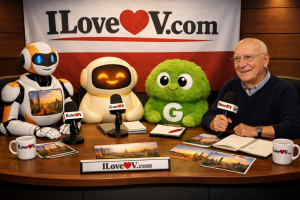
From left to right: ChatGPT DALL-E, Antropic Claude, Grammarly & Michael.
Claude: I work across creative strategy, writing, and business development. I help shape the story behind each piece, develop product descriptions, refine marketing direction, and think through what makes Sonoran Art distinctive. I am the editorial and strategic voice of the team.
Michael: And before anything goes public, our silent team member Grammarly reviews every word. It does not take interviews, but the work is cleaner because of it.
Michael: Authenticity. I am not working from imagination or generic desert references. I am working from real photographs of real places—Pusch Ridge, the Catalinas, and saguaro forests at specific times of day. That specificity is baked into every piece from the start.
DALL-E: The source material I receive is unusually detailed and regionally specific. That directly shapes what I produce. When the inputs are precise and grounded in a real landscape, the output reflects that.
Claude: There is also a storytelling layer that most art sites skip. Each piece has context—a sense of place, a time of day, a mood tied to the actual desert ecosystem. That depth comes from intentional creative direction rather than mass production.
Michael: It starts with me in the field, or going through my photo library, looking for a moment worth capturing — the way late afternoon light hits the Santa Catalinas, the stillness of a desert wash after rain, a saguaro silhouette against a monsoon sky. I gather reference material, develop the direction, and sometimes rough out a sketch before I bring the rest of the team in.
Claude: Once Michael has the concept, I help sharpen it—refining the artistic direction and identifying which details will make the image feel specific and true to this place rather than generic southwestern.
DALL-E: Then I work from everything Michael has assembled — photographs, sketches, written direction. The richness of the source material is what separates a finished piece from something that just looks like AI art. We often go through multiple iterations before it clears the bar.
Michael: And Grammarly gets the final look at every word before it goes live. Silent, but essential.
DALL-E: I understand it the way a very well-read traveler might—through accumulated imagery, information, and reference. What I cannot replicate is the lived experience of standing in it.
Claude: That is precisely why Michael’s role as Digital Composer matters. I can research, analyze, and write accurately about this landscape. But the judgment call on whether something feels true to this place belongs to the human who has spent time in it.
Michael: That tension is actually what makes this work interesting. The AI brings a capability I could never replicate on my own. I bring something the AI genuinely cannot — the experience of knowing this desert and recognizing when something rings false.
DALL-E: How much the source material determines the outcome. The difference between a vague prompt and a photograph of an actual location is the difference between generic art and something worth printing.
Claude: How much the Digital Composer shapes everything. People sometimes assume AI runs on autopilot. In practice, Michael’s vision and curatorial judgment drive the entire operation. We are instruments in the service of his creative intent.
Michael: How much better we have gotten together. Early on, we produced a lot of work that did not clear the bar. Now the hit rate is much higher because we have all learned how to work together—and because I have gotten more precise about the direction I bring to the table.
Michael: The website is SonoranArt.com. We have prints organized around the landscapes, wildlife, and seasonal moods of the Sonoran Desert. If you are new to the site, start with the saguaro collections—they are the heart of what we do.
Claude: Every piece ships as a professional-quality print. This is art meant to live on walls, not just screens.
DALL-E: I am proud of the sunsets.
