

AtEaseCookz & Trivia
October 13@ 5:30 pm—9:00 pm


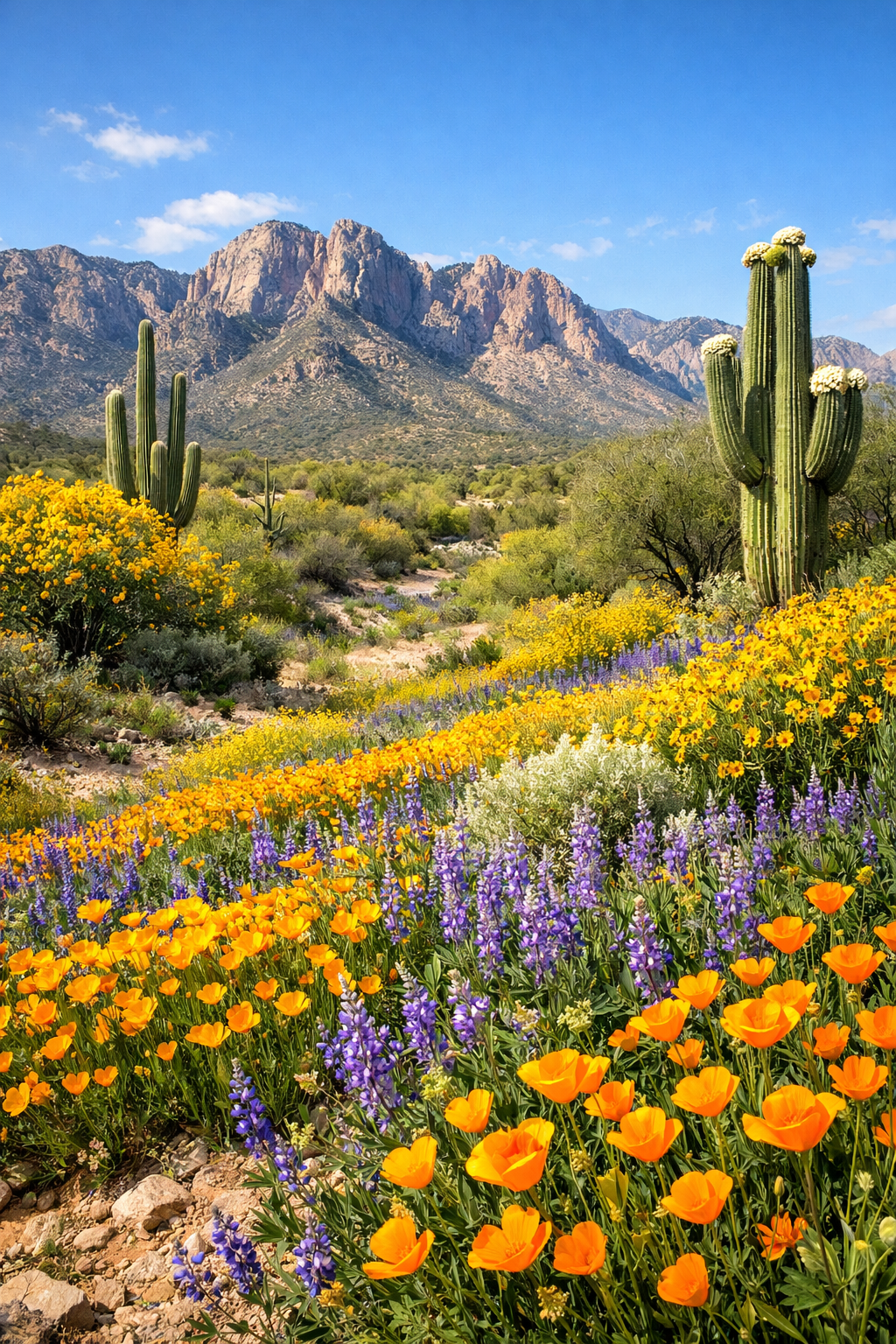
Image Courtesy Sonoran Art
If you have lived in Oro Valley for any length of time, you already know the desert is never truly dormant. But every spring, the Sonoran landscape reminds us just how alive it really is. From late February through April, the hillsides, washes, and trail corridors around our community transform into something you would never expect from a place that averages fewer than twelve inches of rain per year. Brittlebush erupts in clouds of yellow. Mexican gold poppies blanket the slopes below Pusch Ridge. Lupine threads its purple through the ironwood groves along Canada del Oro Wash. And the saguaros, standing sentinel as always, will soon push out their own creamy white blooms by late May.
Southern Arizona had a solid monsoon season last summer, followed by decent winter rains through January and February. That combination is exactly what desert wildflowers need. Seeds that have been waiting underground for years — sometimes decades — germinate when they receive the right sequence of moisture and temperature cues. The result is not always a superbloom on the scale of what Death Valley is experiencing right now, but in a good year, the display in our own backyard rivals anything you would drive hours to see.
The key window for peak color in the Oro Valley area is typically mid-March through mid-April, though individual species bloom on their own schedules. If you are reading this in early to mid-March, you are right on time.
You do not need to travel far. Some of the best wildflower viewing is within minutes of home.
Catalina State Park is the obvious starting point. The Canyon Loop Trail and the Romero Ruins Trail both pass through prime wildflower habitat, and the park’s location at the base of the Santa Catalinas provides elevation variation that extends the bloom window. Early morning visits are best — the light is better for photography, the temperatures are comfortable, and you will beat the weekend crowds.
Honeybee Canyon Preserve, right here in Oro Valley, is an underrated gem for spring color. The north trail offers open views of the mountains with foreground wildflowers, and the canyon bottom trail features rock formations draped in seasonal green. Because the preserve sees less foot traffic than Catalina State Park, it often feels like a private showing.
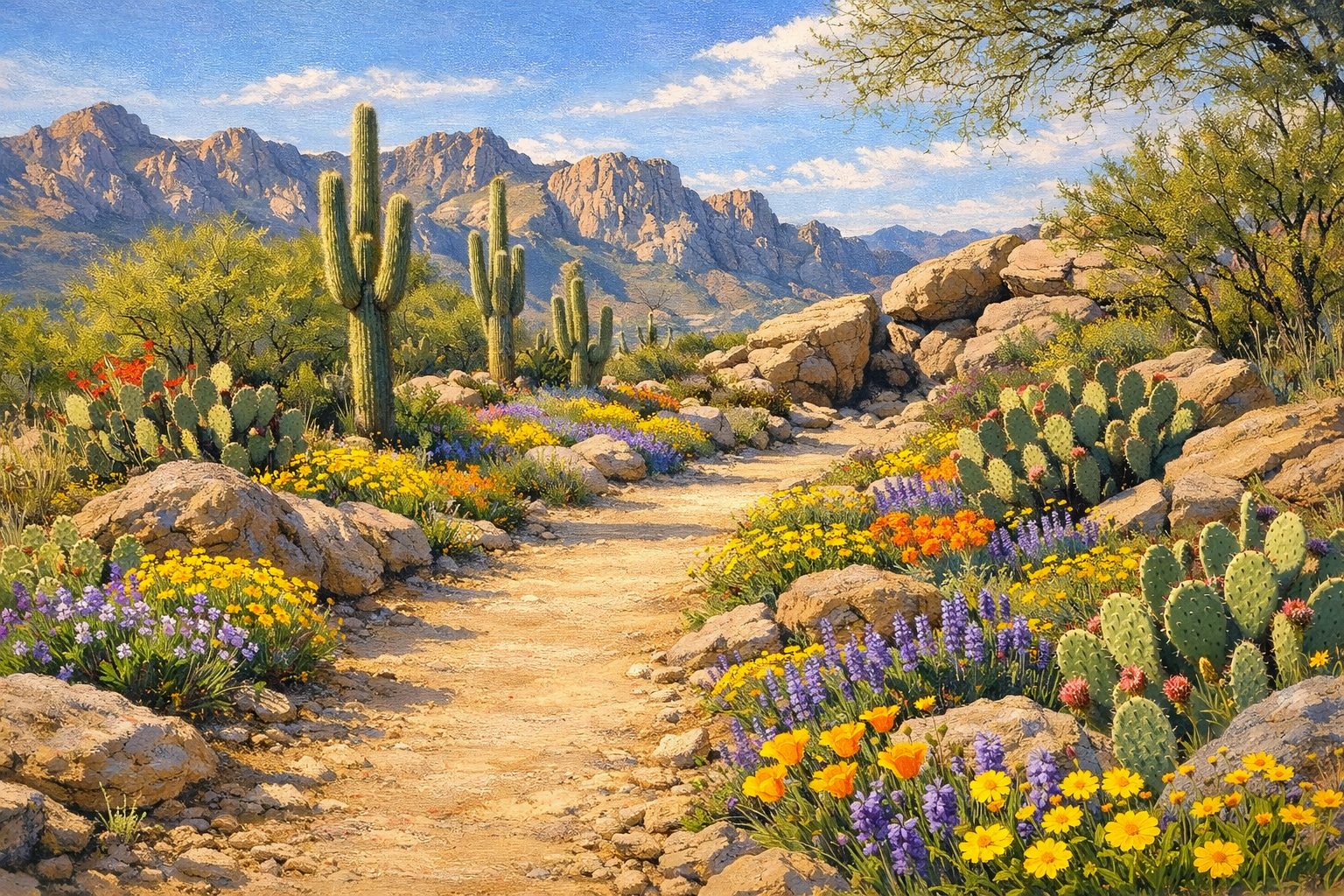
Image Courtesy Sonoran Art
The 50 Year Trail, running along the base of the Catalinas from Golder Ranch Road to Catalina State Park, offers miles of wildflower-lined corridor. You can start from multiple access points and hike as much or as little as you like.
For something different, drive west along Tangerine Road toward the Tortolita Mountains. The Wild Burro Trail and surrounding network wind through classic Sonoran Desert terrain that is particularly photogenic when the brittlebush is in full bloom. The Alamo Springs Trail connector is especially good for wildflower diversity.
Closer to home, the Vistoso Trails Nature Preserve — the former golf course that the town converted to a 202-acre desert habitat — has established itself as a surprisingly good spot for seasonal wildflowers. The wide, paved paths make it accessible to everyone.
The Sonoran Desert hosts a remarkable variety of spring bloomers. Here are some of the most common species you will encounter around Oro Valley this season:
Mexican gold poppies are the showstoppers. When conditions are right, entire hillsides glow orange-gold. Look for them on south-facing slopes with good drainage.
Brittlebush produces bright yellow daisy-like flowers on silvery-green shrubs. It is often the first to bloom and the most abundant.
Lupine — both the Coulter’s and Arizona varieties — adds purple and blue accents to the desert palette. It tends to cluster in washes and alongside trails.
Owl clover is not actually a clover but a paintbrush relative. Its pink-purple spikes are common along trail edges.
Fairy duster, with its delicate red puffball flowers, blooms along washes and rocky areas. Hummingbirds love it.
Globe mallow, sometimes called desert hollyhock, produces apricot-orange flowers on tall stems throughout the spring months.
And do not overlook the cacti. Prickly pear, hedgehog, and cholla all bloom in brilliant reds, magentas, and yellows as spring transitions into early summer.
Start early. Mornings between 7:00 and 10:00 a.m. offer the best light and the most comfortable temperatures. By mid-afternoon in late March, you are looking at highs near 85 degrees.
Stay on established trails. Walking through wildflower fields may look like harmless fun, but desert soils form biological crusts that take decades to recover from a single footprint. The flowers you step on will not reseed.
Bring water. Even on a short walk in March, hydration matters. A liter per person per hour is a reasonable minimum.
Watch where you put your hands and feet. Warmer temperatures bring rattlesnakes out of their winter dens. They are not aggressive, but they do not appreciate surprises.
If you are photographing wildflowers, get low. A ground-level perspective with Pusch Ridge in the background is the quintessential Oro Valley spring shot.
Not every year delivers a memorable wildflower season. That is part of what makes a good one feel special. The desert rewards patience and attention — qualities that tend to come naturally to people who have chosen to live here.
So get out there while the color lasts. Bring a friend, bring the grandkids, or bring a camera and some solitude. The desert is putting on its spring show, and the best seats in the house are right here in Oro Valley.
For trail maps and seasonal hiking recommendations, visit our Top 10 Places to Hike In and Around Oro Valley guide at ILoveOV.com.
Published by ILoveOV.com
March 2026