
Trivia and At Ease Cookz
August 04@ 5:30 pm—9:00 pm



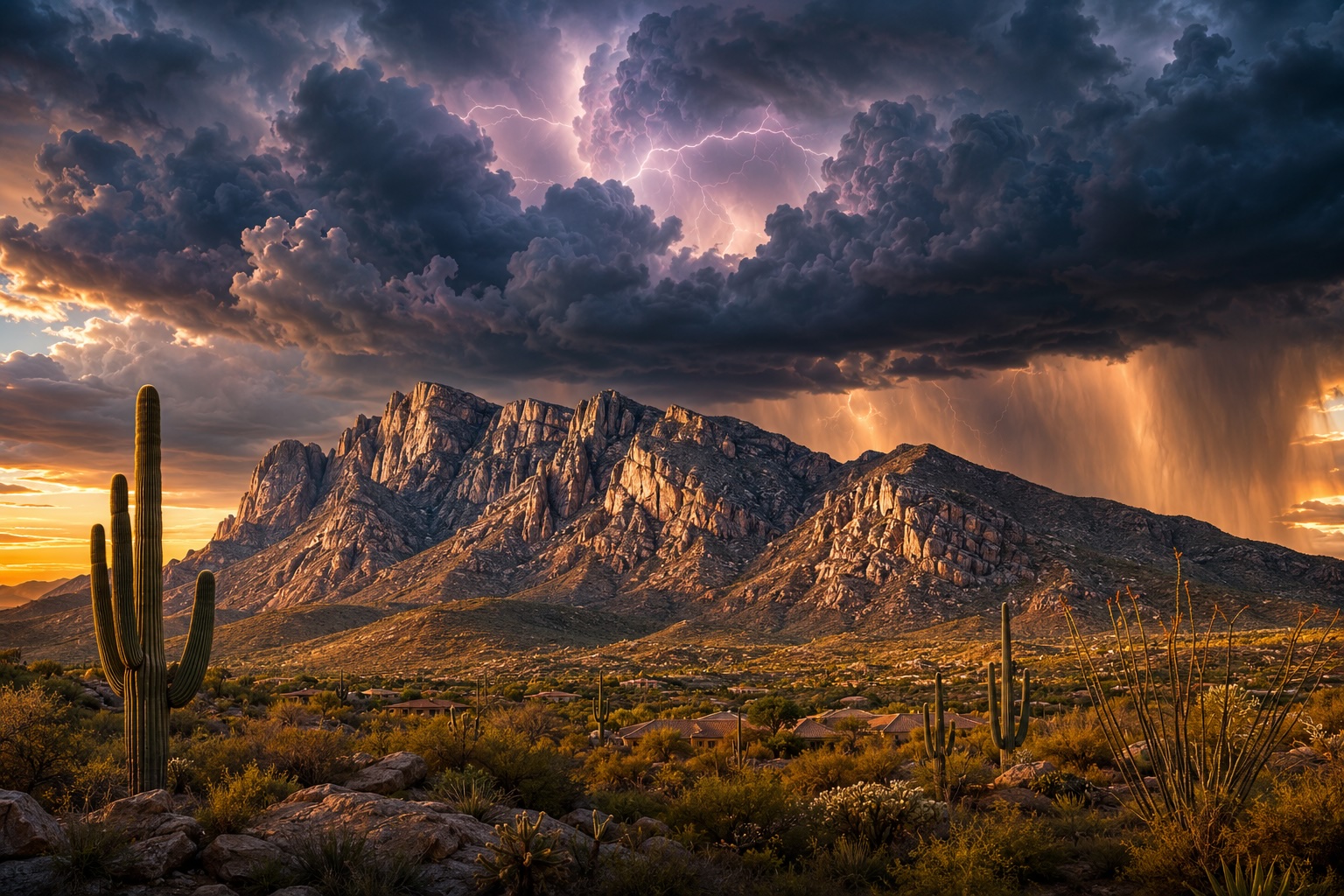
The late August monsoons provided drama unlike anything they’d experienced during New York’s predictable weather patterns. Watching wall clouds build over the Santa Catalinas with towering formations that resembled nature’s own skyscrapers, and then witnessing the desert’s transformation as rare rain brought wildflowers blooming overnight, felt like living inside a nature documentary where they were participants rather than observers.
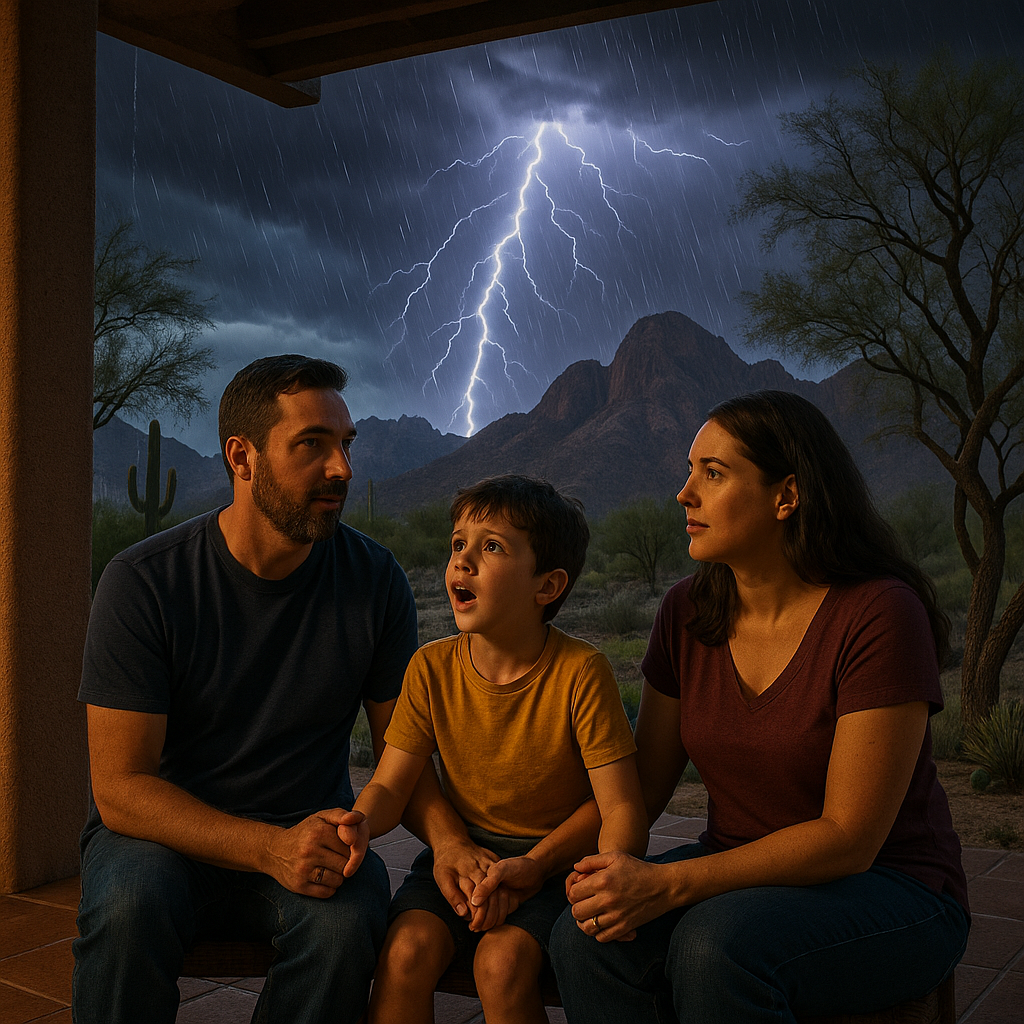
Storm over the Catalins
During one particularly spectacular storm, the family sat on their covered patio, watching lightning illuminate the mountains. At the same time, rain drummed on their tile roof with such intensity that conversation became impossible. Daniel was simultaneously terrified and exhilarated, gripping both parents’ hands as thunder shook the house and wind whipped the mesquite trees into frenzied dances that reminded them of their smallness in relation to the natural forces.
“In New York, storms meant cancelled plans and subway delays,” Marisol observed during a brief lull that allowed conversation. “Here, they feel like… events. Like nature putting on a show just for us.”
The difference went beyond scale or intensity—it was about the relationship to the environment. In the city, weather had been something to overcome or endure, an obstacle to navigation or productivity. Here, it demanded attention and respect, providing entertainment and education, and connected them to seasonal cycles they’d never noticed when buildings and artificial climate control insulated their lives.
Carlos had developed a weather app addiction, tracking storm cells and warning neighbors through their new Oro Valley neighborhood Facebook group about approaching haboobs, flash flood potential, and the best viewing spots for lightning photography. It was a far cry from checking subway delays, but it felt more purposeful somehow, contributing to community safety while deepening his understanding of the environment that was becoming home.
Daniel had started keeping a weather journal, documenting storm patterns, rainfall measurements, and the desert’s responses to moisture. His teacher had suggested that he might want to participate in the school’s citizen science program, contributing data to the University of Arizona’s climate research while developing observation and data collection skills that connected classroom learning to real-world applications.
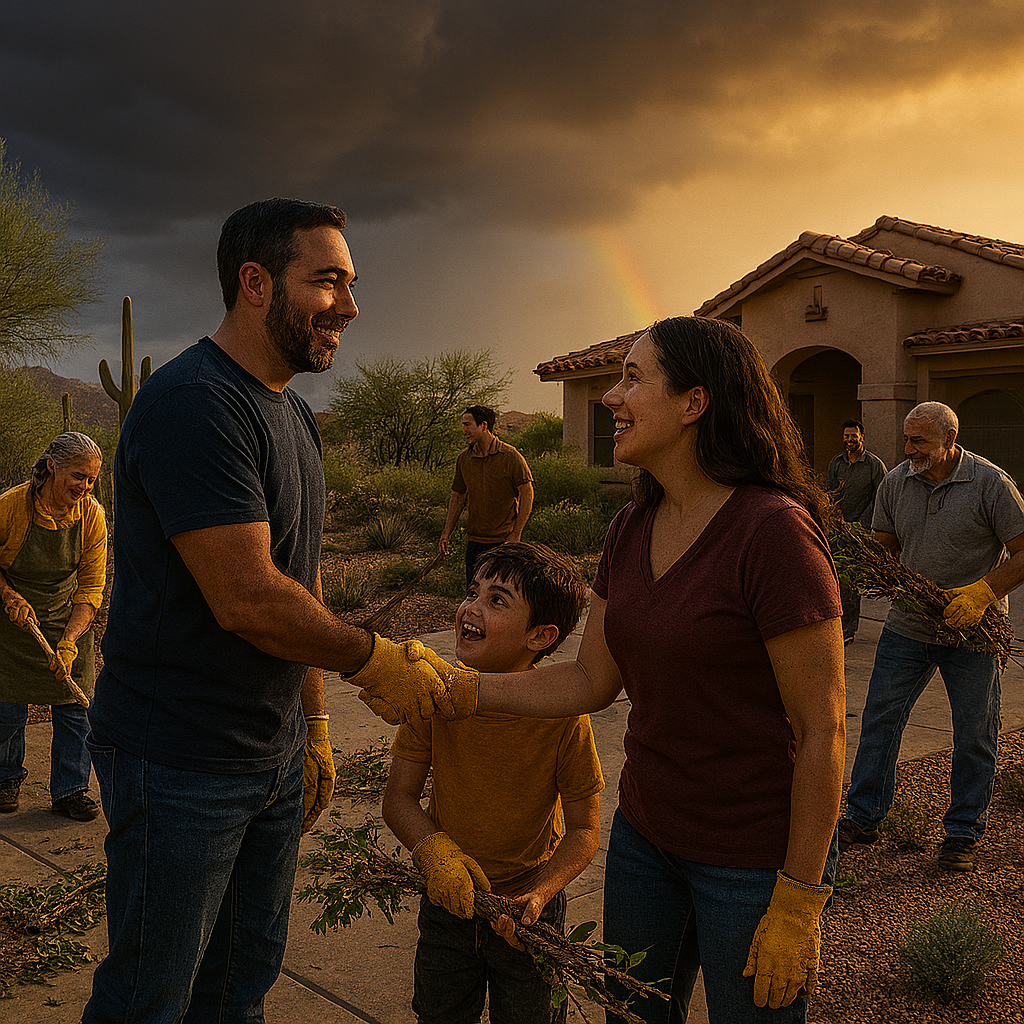
After the Storm
The storms also brought them closer to their neighbors, as everyone emerged afterward to check for damage, clear debris, and share the excitement of the dramatic weather they had safely experienced. These casual interactions fostered the kind of community connections that made their neighborhood feel less like a collection of individual houses and more like a place where people looked out for one another.
One evening, after a particularly intense storm, they surveyed the aftermath of their neighborhood. They found themselves joining an impromptu block party as neighbors gathered to share storm stories, check on elderly residents, and help clear a fallen palo verde branch that was blocking the street. The collaborative response to shared experience felt like something from a different era—community building that happened naturally rather than requiring organizational effort.

;>)