
Trivia at the Community Center
September 20@ 4:00 pm—6:00 pm


July brought temperatures that made New York’s summer heat seem like gentle warming – 115 degrees that turned car steering wheels into torture devices and made the brief walk from air-conditioned buildings feel like opening an oven door. But it also brought monsoon season, with dramatic thunderstorms that transformed the desert landscape and usually filled dry washes with rushing water that reminded them of nature’s power on entirely different scales here.

Hiking early morning in the Catalinas
Carlos had surprised the family by suggesting they hike the Linda Vista Trail early one Saturday morning before the heat became unbearable. The suggestion came from his new coworker, Miguel, who’d mentioned that summer hiking required strategic timing but offered rewards unavailable during tourist season—empty trails, dramatic storm clouds building over distant mountains, and wildlife more active in the cooler hours.
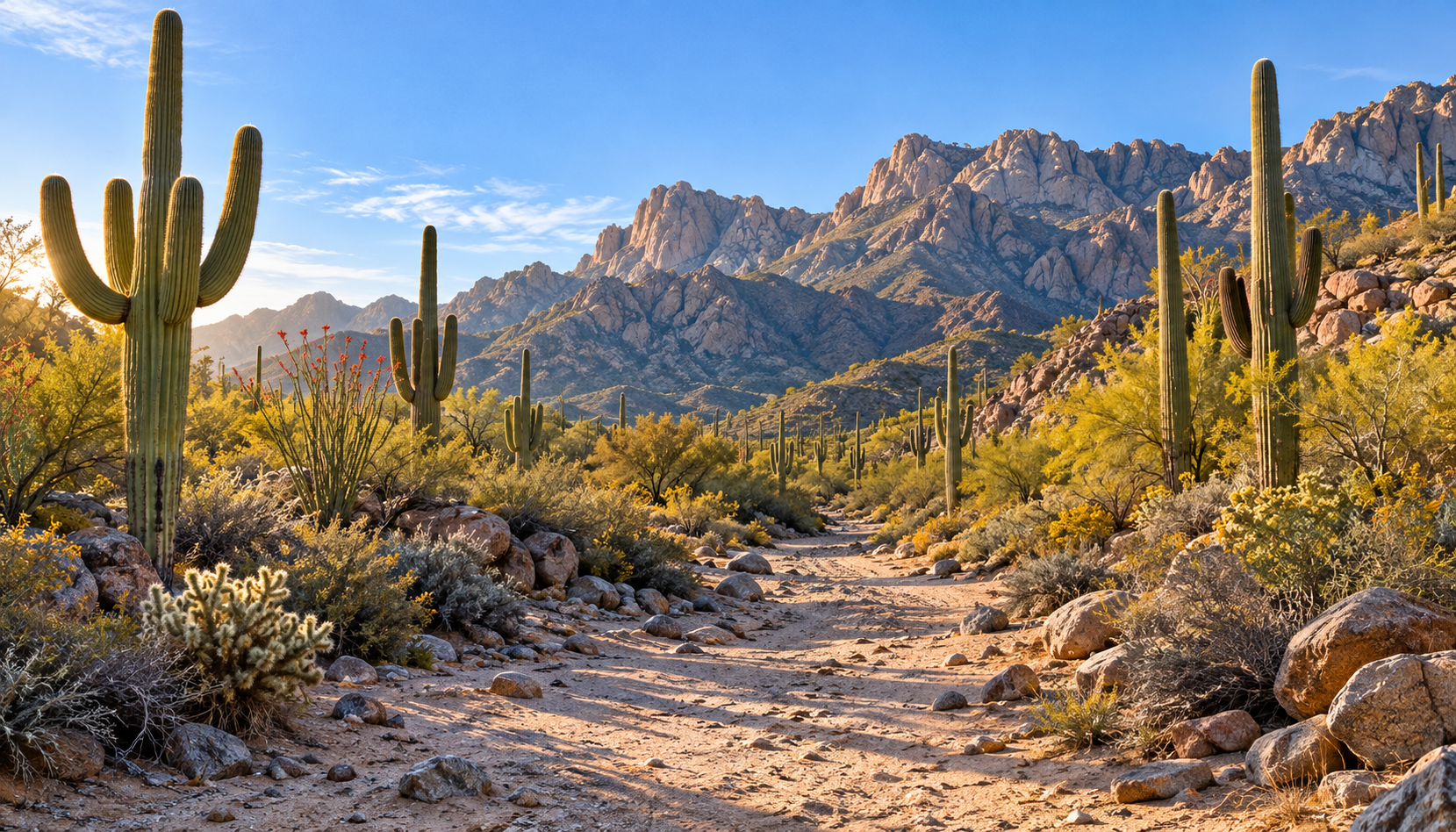
The 2.2-mile loop offered panoramic views of their new home from perspectives they’d never imagined, with lookout points where the entire Oro Valley spread below them like a carefully planned community nestled purposefully in the vast Sonoran landscape. Daniel was fascinated by the massive saguaro cacti they encountered, some clearly ancient, with arms reaching toward the sky in positions that looked like celebration or supplication.
“Did you know these can live for 200 years?” he announced, reading from a trail guide they’d picked up at the Catalina State Park visitor center. “Some of these were here before Arizona was even a state. Before cars. Before electricity.”
The concept of such longevity in living things impressed him in ways that skyscrapers and subway systems never had. He wanted to stop and examine each major saguaro they passed, speculating about what they’d witnessed, what changes they’d survived, and how they’d adapted to decades of drought and occasional abundance.
Halfway through the hike, Daniel scraped his knee on loose gravel while investigating a zebra-tailed lizard that had caught his attention. As Marisol cleaned the wound with supplies from the small first-aid kit Carlos had insisted they carry—a precaution that had seemed overly cautious but now proved wise—she realized how different this felt from their old weekend routines of museum visits, subway rides, and indoor entertainment that kept them insulated from weather and seasons.
“I miss being able to walk to everything,” Marisol admitted as they rested in the shade of a mesquite tree, sharing water and trail mix while the morning heat began building toward the day’s intensity.

Look at that vista!
“But look at that view,” Carlos gestured toward the valley spread below them, their neighborhood visible as a small cluster of red-tile roofs amid the vast desert expanse that stretched toward the Santa Catalinas and Tortolita Mountains in every direction. “We couldn’t see for miles in Manhattan. We couldn’t see the sky.”
Daniel, his knee bandaged and his spirits recovered, was already investigating a desert spiny lizard sunning itself on a nearby rock. His natural curiosity about the desert ecosystem overrode any lingering discomfort from his minor injury. “Can we come back next week? Tyler says there are different lizards in different seasons.”
The question represented something new in their family dynamic—enthusiasm for local exploration rather than tolerance for necessary exercise, genuine interest in their environment rather than simply accepting changed circumstances.

;>)
;>)