
Trivia at the Community Center
September 20@ 4:00 pm—6:00 pm


“We’re not the Latino family here—we’re part of a Latino community that’s part of a larger community.” Discover how Oro Valley’s integrated Hispanic heritage allowed one family to embrace their cultural identity authentically, from dual-language education advantages to community celebrations that enrich everyone.
What’s the difference between cultural tokenism and genuine belonging?
The family’s comfort with their Latino identity had deepened and evolved in Arizona’s cultural environment, where Hispanic heritage was integrated into civic life and community leadership rather than existing as a separate or marginalized cultural expression. Unlike New York, where cultural identity often felt defensive or performed for external audiences, Oro Valley’s Hispanic community was woven into the fabric of local government, business leadership, and educational administration.
Daniel’s Spanish had improved significantly through the Amphitheater District’s dual-language programs that treated bilingualism as an academic advantage rather than a remedial need. His classes were challenging and engaging, with teachers who understood that maintaining cultural connections while mastering English was beneficial for cognitive development and future opportunities in Arizona’s bilingual economy.
Marisol had joined Mujeres Unidas de Oro Valley, a Latina professional organization that combined networking with community service in ways that felt authentic rather than instrumental. The group’s projects included scholarship programs for local students, small business mentoring for Latina entrepreneurs, and cultural education initiatives that enriched the entire community’s understanding of Hispanic contributions to regional development.
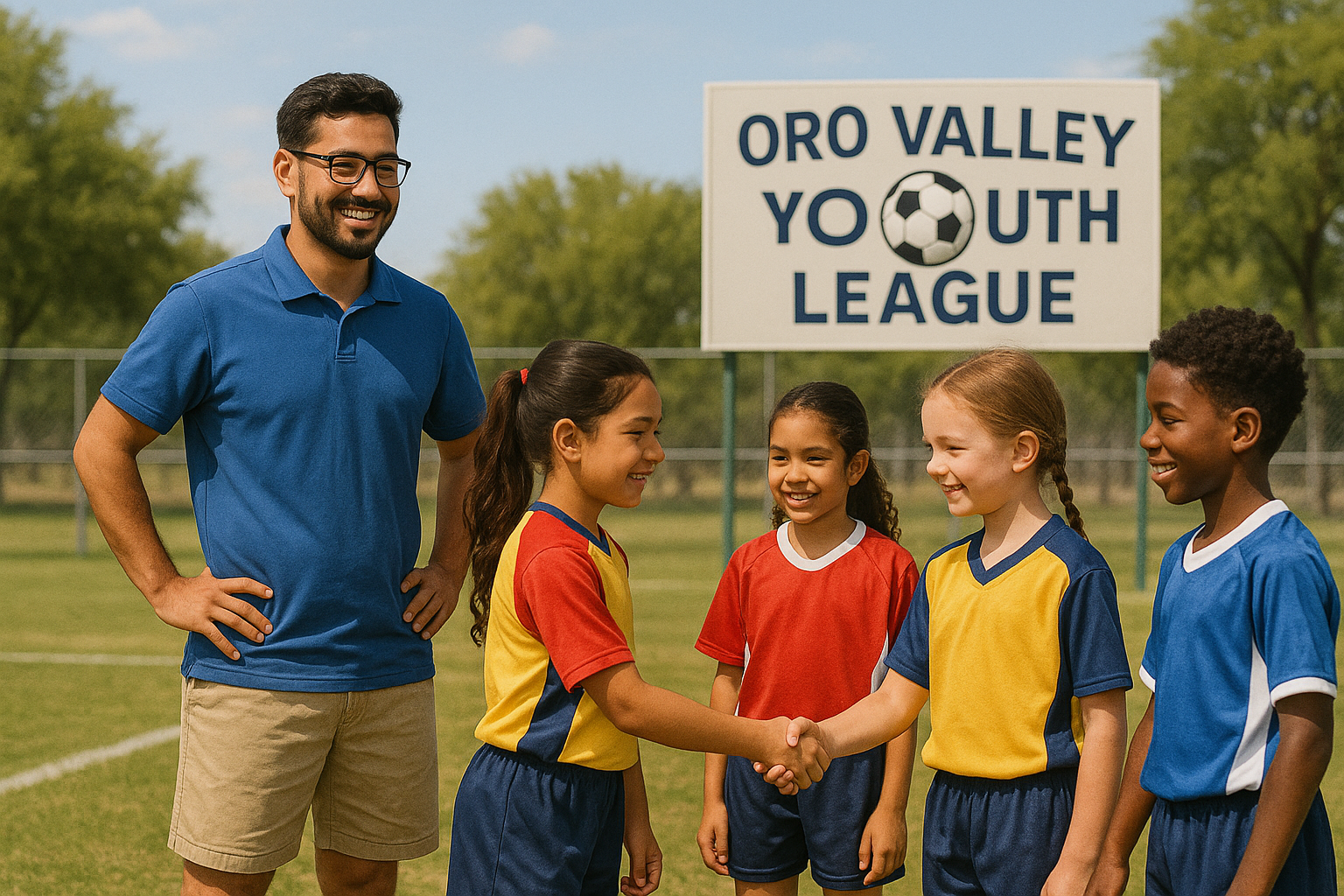
Carlos is coaching soccer for Oro Valley’s youth league.
Carlos had begun coaching soccer for Oro Valley’s youth league, where bilingual communication was the norm rather than the exception and where children from diverse backgrounds learned teamwork and sportsmanship in an environment that celebrated rather than merely tolerated cultural differences. His coaching style, influenced by Latin American approaches to youth development, was appreciated by parents and effective with children who responded well to his emphasis on creativity and collaboration.
“We’re not the Latino family here,” Marisol reflected during a Día de los Muertos celebration at the Oro Valley Community Center that had been organized collaboratively by Hispanic families and embraced enthusiastically by the broader community. “We’re part of a Latino community that’s part of a larger community. It feels less isolated, more authentic.”
The celebration had included traditional altar displays, educational presentations about the holiday’s significance, and food prepared by families representing different regions of Mexico and Central America. Children learned about cultural traditions while adults shared stories about family history and immigration experiences that enriched everyone’s understanding of their community’s diverse heritage.
Daniel’s comfort with his cultural identity was evident in his willingness to share family traditions with classmates, his pride in speaking Spanish during school presentations, and his interest in learning about other Latino cultures represented in his school and community. The confidence came from being part of a cultural community rather than being an individual representative of an entire ethnic group.

;>)
;>)