
Trivia at the Community Center
September 20@ 4:00 pm—6:00 pm


Two years have transformed the Martinez family from anxious newcomers seeking guidance to confident community leaders providing direction to others.** This pivotal chapter showcases the culmination of their Oro Valley journey as they step into meaningful civic roles that shape their adopted hometown’s future.
Marisol’s election to the Town Council brings new challenges in budget planning, development decisions, and the delicate balance between growth and desert preservation. Carlos discovers how his technology expertise can drive economic development through the Chamber of Commerce, while Daniel’s environmental leadership extends beyond the classroom to district-wide policy discussions.
**Watch as the family realizes the profound difference between being consumers of city services and active participants in creating the community they want to call home.**
Their story illustrates the unique opportunity that smaller communities like Oro Valley offer: the chance for individual contributions to create meaningful, lasting impact on the place where you’ve chosen to build your life.
—–
*New chapters of Desert Beginnings post every Monday. Follow along as we celebrate the authentic spirit of families making Oro Valley their home.*
By their second spring, the family had transitioned from newcomers seeking assistance to established community members providing leadership and guidance to others. Marisol’s election to the Oro Valley Town Council represented not just personal achievement but recognition that their family had become genuinely invested in local institutions and long-term community development.
Her first council meeting involved budget discussions, development planning, and strategic visioning that required understanding both current community needs and future growth projections. The work was more complex than she’d anticipated, involving everything from water resource management to transportation planning, as well as balancing growth with desert preservation, which defined Oro Valley’s character.
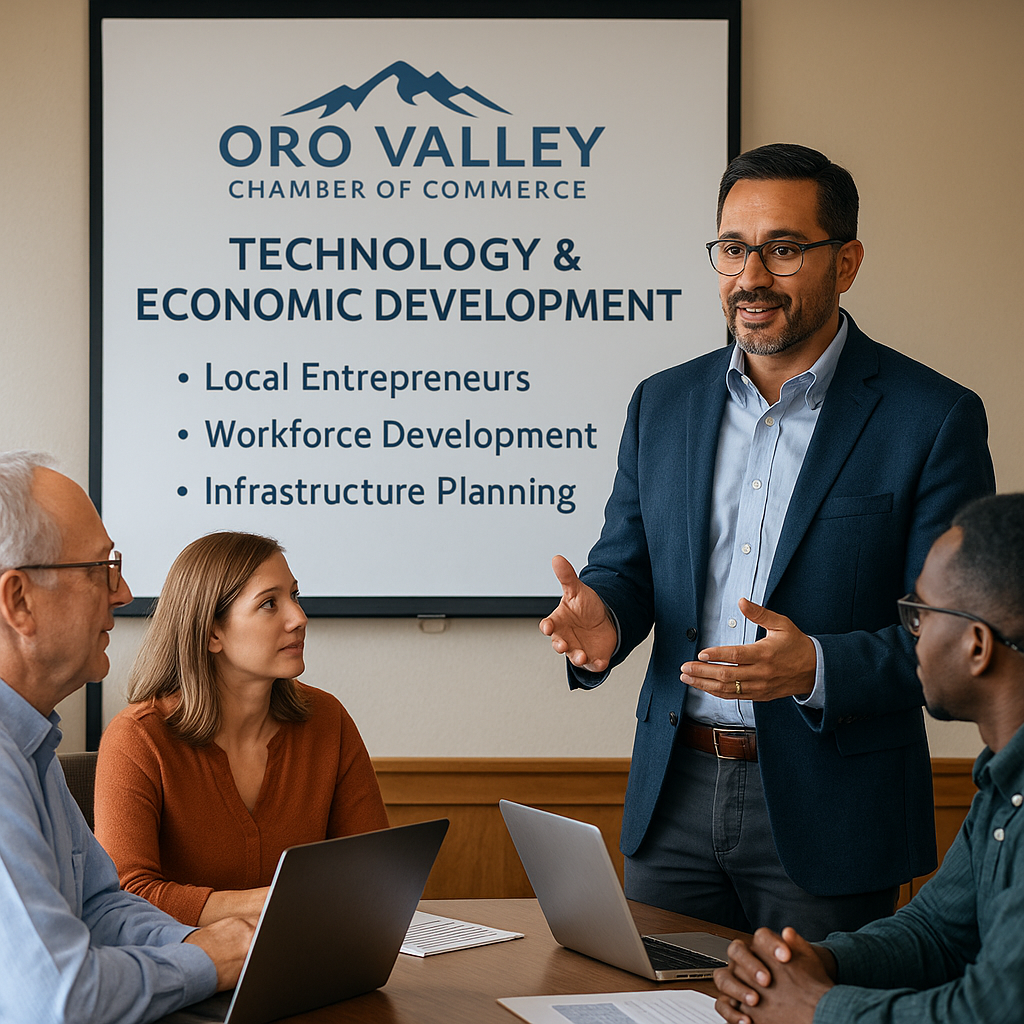
Carlos had joined the Oro Valley Chamber of Commerce technology committee…
Carlos had joined the Oro Valley Chamber of Commerce technology committee, where his expertise in municipal systems and small business networks made him a valuable resource for economic development planning. The role involved consulting with local entrepreneurs, supporting workforce development initiatives, and contributing to infrastructure planning that would attract new businesses while preserving the community character that made Oro Valley desirable.
Daniel’s involvement had also evolved from participant to leader. His election as student representative on Painted Sky Elementary’s environmental club gave him voice in policy discussions about recycling programs, energy conservation, and outdoor education initiatives that would affect students for years to come. His presentations to the Amphitheater School District board about water conservation and native plant landscaping had impressed adults with both his knowledge and his communication skills.
Their leadership roles felt natural rather than forced, arising from genuine investment in community wellbeing rather than resume building or social climbing. The manageable scale of local government and civic organizations made individual contributions meaningful in ways that would have been impossible in larger, more anonymous urban environments.
“In New York, we were consumers of city services,” Carlos reflected during a Chamber meeting focused on supporting local businesses while managing growth pressures from Tucson’s northern expansion. “Here, we’re participants in creating the community we want to live in.”
The distinction was fundamental to their satisfaction with their new life. Instead of feeling like passive recipients of municipal services or victims of policies made by distant bureaucrats, they were active participants in democratic processes that directly affected their daily lives and their son’s future opportunities.
Marisol’s marketing background proved invaluable for town initiatives aimed at increasing community engagement and improving services for diverse populations. Her campaigns promoting water conservation programs and highlighting Oro Valley’s quality of life to potential businesses had significantly increased participation while building partnerships with Pima County and other regional organizations.
The family’s involvement in multiple civic organizations was creating networks of connection that extended far beyond their immediate social circle. They knew town council members, chamber leaders, school administrators, and nonprofit directors—relationships that made their community feel both knowable and responsive to citizen input.

;>)
;>)